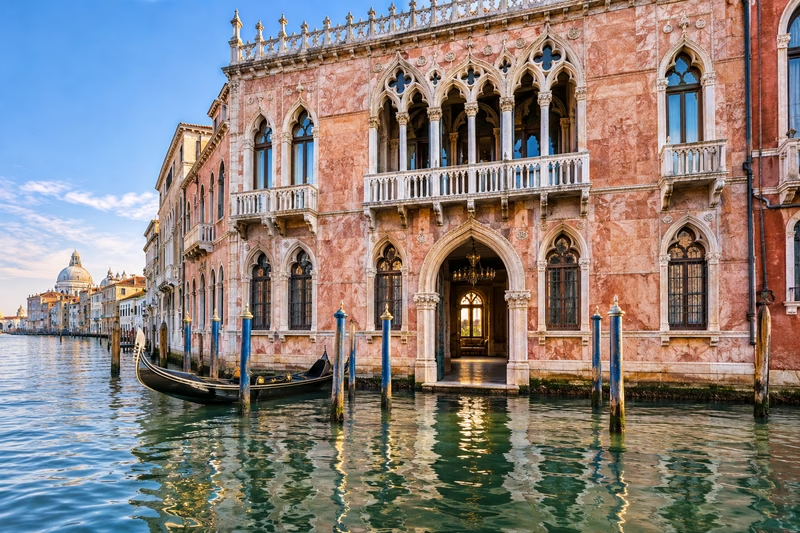
Water first
In Venice the first question is not about the view but about the level. You look at how high the entrance is, whether the home is on the ground floor, the mezzanine or the piano nobile, and whether it has been flooded in the past. High water is concentrated mainly in autumn and winter; the lagoon's defence works have changed its effects, but the risk remains something to know and manage, not to ignore.
An honest seller tells you how the house has behaved: how far the water came, what flood barriers exist, where the electrical sockets are, what is kept down low. The marks on the walls, the saltpetre coming through, the state of the plaster on the ground floor tell you the rest. It is no accident that the piano nobile was designed to sit above the water, and the altanas to sit above everything.
Protections: the city is a monument
Almost everything in Venice is protected. Façades, windows, colours, altanas and courtyards follow precise rules, and even inside, terrazzo floors, painted beam ceilings and stucco may be listed. Every alteration needs authorisation, often with the opinion of the heritage authority, the Soprintendenza. What is possible depends on the municipality and on the specific protection: before imagining a new kitchen or an extra bathroom, ask a technician.
Restoration: a building site in the lagoon
Building work in Venice has its own logistics: materials and rubble travel by boat, deliveries depend on the tides, access is narrow and every bridge is a flight of steps. Specialist firms are few and must be booked well ahead. The realistic timetable is longer than on the mainland and it is wise to allow for that from the start: a serious restorer does not promise exact dates.
The building and its shared parts
In a historic palace the sticking point is often the shared parts: roofs, façades, staircases, foundations. Before buying, ask for the minutes of the last owners' meetings, the extraordinary expenses approved or planned, and the state of works already carried out. A perfect apartment in a neglected building soon becomes a shared problem.
Mooring, water entrance and daily life
A water entrance or a boat berth is a privilege, but it comes with concessions, maintenance of the mooring posts and rules of use to be checked. In everyday life other things count: the distance from the nearest stop, the route for carrying home the shopping, the children's way to school, access for guests. A Venetian home should also be tested on foot, with bags in hand.
From the centre to the Lido
- San Marco: formal, with some of the highest values and many visitors.
- Dorsoduro: bright and lively with students, with wide squares and quiet lanes.
- Cannaregio: more residential and less touristy, with broad quaysides along the canals and neighbourhood life.
- Castello: more residential towards the east, with its gardens and quiet corners.
- Giudecca: open views over the basin and more space, a short crossing from the centre.
- Lido: Liberty villas, gardens and a slower rhythm, with the sea a few steps away.
Before making an offer
- Ask for photographs and accounts of how the house coped with recent high water.
- Commission a technical inspection of structure, damp and systems.
- Check title deeds, floor plan and protections.
- Ask for the minutes of owners' meetings and planned expenses.
- Understand the realistic timing of the works.
Rules change: for every step it is wise to speak to the notary and to a technician who works regularly in the lagoon.