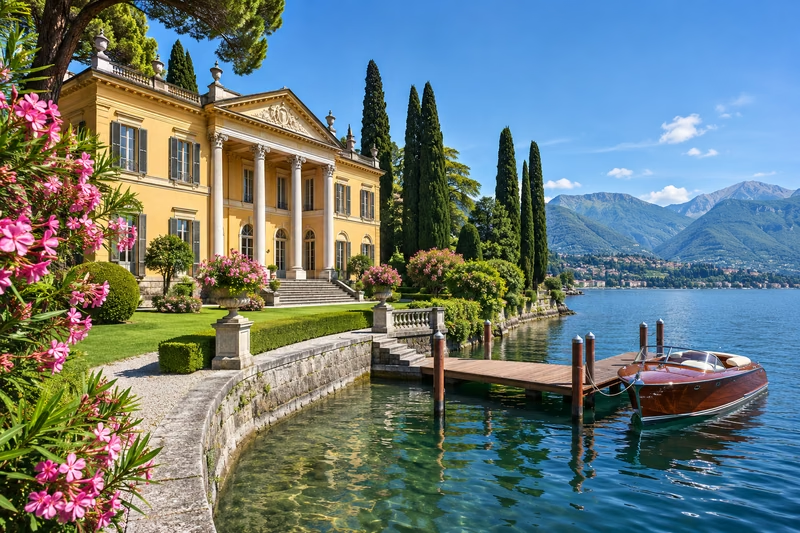
A farmhouse is not a country villa
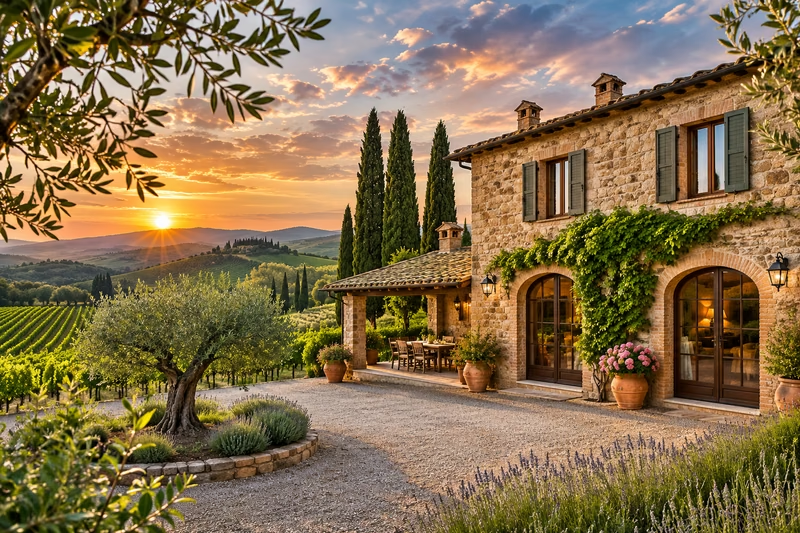
Faced with a stone farmhouse, cypresses and the late-afternoon light on the fields, the first impulse is to say yes. It is an understandable impulse and it must be kept in check: a farmhouse is a rural building with an agricultural past, and almost everything that matters, from the water to the drains, from the road to the land, cannot be seen in photographs. This is the checklist we use ourselves, in the order in which it is best tackled.
Use classification and land registry
Many farmhouses began as tenant farmers' houses or farm outbuildings and changed use over the years. First, check how the building is classified, whether the floor plan matches its actual state and whether extensions, porticoes or swimming pools were authorised. What can be regularised, or altered in future, depends on the municipality and on the landscape restriction: the answer cannot be improvised, it is asked of a technician.
Water and drainage
This is the chapter that most often surprises. Check where the water comes from (mains, well, spring), how it is treated and whether the quantity is enough even in summer. Equally important is where the waste water goes: in the countryside there is often no sewer, and the treatment system must be in order and working.
Structure and roof
Stone walls, floors of beams and terracotta tiles, a roof of clay pantiles: all beautiful, all to be inspected. Look at rising damp in the walls, the condition of the beams (woodworm is not rare), cracks, the roof timbers. A structural survey before the offer is a modest expense compared with the surprises it can prevent.
The road and the boundaries
The gravel track that looks picturesque in spring can become a problem in winter. Ask who maintains it, whether rights of way exist, where the boundaries really run and whether an emergency vehicle can reach the house. A walk along the perimeter with the cadastral map in hand is worth more than many explanations.
Land, olive groves and vineyards
If the property includes olive groves, vineyards or woodland, you need to understand who owns the crops, whether the land is leased to third parties or run by a farming business, and what it costs to maintain. Olive trees and vines are beautiful as long as someone looks after them; woodland needs regular clearing, partly to prevent fires.
Pool, garden and new works
A swimming pool in a protected landscape can never be taken for granted. Before counting on a new pool, an extension or an outbuilding, check that they are allowed by the planning instruments and by the restriction. If a pool already exists, ask for all the documentation that concerns it.
What to bring to the viewing
- The cadastral floor plan and, if there is one, the building permit.
- A technician you trust, even for just half a day.
- A torch for cellars and lofts, and a phone to test the network coverage.
- Questions about winter: heating, firewood, snow, the road.
The cheapest check remains a chat with the neighbours and with whoever works the surrounding fields: they know what the road is like in February and how long the water lasts in August. Rules change from one municipality to another and over time: before committing, it is wise to have the documents read by the notary and by a technician.